Member Login
Search
Jump to a Date
Sponsored Communities
Cool stuff
Neat Stuff

Visit our shop for nerds in control lifestyle products.
Thermal Overload
The threads that wouldn't die...
- PC reliability?
- Windows, real time
- PID loops
- PCs vs. PLCs
- Replacing people
- MS 'monopoly'?
- Software quality
- Where do we go from here?
- Why pay?
- PC reliability?
- Windows, real time
- PID loops
- PCs vs. PLCs
- Replacing people
- MS 'monopoly'?
- Software quality
- Where do we go from here?
- Why pay?
Fortune
This is your fortune.
RSS Feed
www.control.com/rss/
To get a personalized feed, become a member at no cost.
Hello everyone,
I have a 5 meter radio dish on a mobile platform that I want to motorize and convert into a computer-controlled radio telescope for amateur radio astronomy. The preexisting dish mount can be manually aimed, but for astronomy use this will not to do. My main aim is to have it track the sky with high precision at low speeds, yet still have the ability to to move at high-speeds when switching to a new target.
The speed and accuracy requirements are a bit of a problem for us; we need to point it with an accuracy of 2 arcminutes (0.03 degrees) in both axis! In addition, the movement speed needs to go from as slow as 0.1 arcmin/sec (0.0002 RPM) to 60 arcmin/sec (1 degree/sec or 1/6 RPM).
The preexisting mount is altitude-azimuth based. For rotation, the radio dish is mounted on a round swivel base. Right now we're planning to bolt a roller chain around it and drive it with a pinion gear, giving us a 28:1 reduction ratio. Would our setup work if we used a 200:1 planetary gear and a AC servo motor-drive? The combined reduction ratio of 5600 means if we drive the motor at 1100 RPM to we'll get slightly better than 1 deg/sec, and at 50 RPM we can get 3 arcmin/sec.
From that, is it feasible to use PWM to drive it at lower speed? Should we worry about stiction for these accuracies? What is the proposed solution in this scenario?
I have a 5 meter radio dish on a mobile platform that I want to motorize and convert into a computer-controlled radio telescope for amateur radio astronomy. The preexisting dish mount can be manually aimed, but for astronomy use this will not to do. My main aim is to have it track the sky with high precision at low speeds, yet still have the ability to to move at high-speeds when switching to a new target.
The speed and accuracy requirements are a bit of a problem for us; we need to point it with an accuracy of 2 arcminutes (0.03 degrees) in both axis! In addition, the movement speed needs to go from as slow as 0.1 arcmin/sec (0.0002 RPM) to 60 arcmin/sec (1 degree/sec or 1/6 RPM).
The preexisting mount is altitude-azimuth based. For rotation, the radio dish is mounted on a round swivel base. Right now we're planning to bolt a roller chain around it and drive it with a pinion gear, giving us a 28:1 reduction ratio. Would our setup work if we used a 200:1 planetary gear and a AC servo motor-drive? The combined reduction ratio of 5600 means if we drive the motor at 1100 RPM to we'll get slightly better than 1 deg/sec, and at 50 RPM we can get 3 arcmin/sec.
From that, is it feasible to use PWM to drive it at lower speed? Should we worry about stiction for these accuracies? What is the proposed solution in this scenario?
I see two problems. First your requirements are for a 600 to 1 speed range (0.1 arcmin/sec to 60 arcmin/sec). Second, is backlash in the drive mechanism.
For the speed range, if we assume you have a servo motor with a maximum speed of 3600 rpm, your minimum speed will be 6 rpm. I don't think you will get smooth control at that low of a speed. I would suggest that you either have two drives, or have two gear ratios to give you both rapid traverse and low speed tracking. As to which method is more practical depends on how long (over how large an angle) you have to track at low speed.
The second problem is backlash. Backlash is mechanical "play" or "slack" in the drive mechanism. If the motor switches direction, it has to take up all the play in the drive before you get any actual motion of your antenna. For accurate control, I think you will want what is called "zero backlash". I think your chain drive mechanism will be a problem.
You might think about having two superimposed drive mechanisms. A low speed track mechanism could ride on top of a rapid traverse mechanism. Once you use the rapid traverse mechanism to get roughly pointed at the star, you could use the low speed track mechanism for accurate pointing and tracking. This way you could design the drive system for the track mechanism for accuracy and smoothness without having to compromise it for high speed. The high speed drive could be designed for high power and low cost, since it won't affect the tracking.
M Griffin
For the speed range, if we assume you have a servo motor with a maximum speed of 3600 rpm, your minimum speed will be 6 rpm. I don't think you will get smooth control at that low of a speed. I would suggest that you either have two drives, or have two gear ratios to give you both rapid traverse and low speed tracking. As to which method is more practical depends on how long (over how large an angle) you have to track at low speed.
The second problem is backlash. Backlash is mechanical "play" or "slack" in the drive mechanism. If the motor switches direction, it has to take up all the play in the drive before you get any actual motion of your antenna. For accurate control, I think you will want what is called "zero backlash". I think your chain drive mechanism will be a problem.
You might think about having two superimposed drive mechanisms. A low speed track mechanism could ride on top of a rapid traverse mechanism. Once you use the rapid traverse mechanism to get roughly pointed at the star, you could use the low speed track mechanism for accurate pointing and tracking. This way you could design the drive system for the track mechanism for accuracy and smoothness without having to compromise it for high speed. The high speed drive could be designed for high power and low cost, since it won't affect the tracking.
M Griffin
Gentlemen,
Thank you very much for the informative replies. You have brought attention to the issue of backlash, something which was in the back of our minds but have dreaded to face, seeing as how solving it would be very problematic.
M Griffn: we're considering this motor (AKM52G-ANCNDB00) from Danaher motion. It's an AC servo motor combined with a DTRD115-200-0-RM1115-71 gearhead (200:1 reduction ratio). Now using this gearhead we will get a total reduction ratio of 5,600x given that our roller chain reduction is 28x. We have revised our requirements to be more realistic and our minimum speed now is 5 arcmin/sec. To achieve this minimum speed the motor will need to run at 78 RPM. To go from 5 arcmin/sec to 60 arcmin/sec (1 deg/sec) the motor will run at 933 RPM.
Now, can we achieve a smooth motion profile running at 78 RPM?
Concerning using two drives, can you please elaborate how this can be implemented?
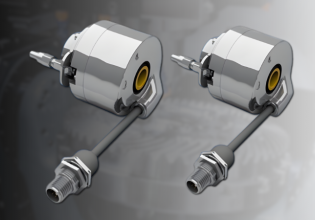
Ryan Butler: the motor we're considering comes with an absolute multi-turn sine encoder with a line count of 1024.
Thank you very much for the informative replies. You have brought attention to the issue of backlash, something which was in the back of our minds but have dreaded to face, seeing as how solving it would be very problematic.
M Griffn: we're considering this motor (AKM52G-ANCNDB00) from Danaher motion. It's an AC servo motor combined with a DTRD115-200-0-RM1115-71 gearhead (200:1 reduction ratio). Now using this gearhead we will get a total reduction ratio of 5,600x given that our roller chain reduction is 28x. We have revised our requirements to be more realistic and our minimum speed now is 5 arcmin/sec. To achieve this minimum speed the motor will need to run at 78 RPM. To go from 5 arcmin/sec to 60 arcmin/sec (1 deg/sec) the motor will run at 933 RPM.
Now, can we achieve a smooth motion profile running at 78 RPM?
Concerning using two drives, can you please elaborate how this can be implemented?
Ryan Butler: the motor we're considering comes with an absolute multi-turn sine encoder with a line count of 1024.
As to whether 78 rpm is "fast enough" is hard to say. A lot depends on the details of the overall mechanical design. What can be said is that the risks are much lower than at 6 rpm.
As for two drives, what I believe has been done for some large telescopes is to have two superimposed mechanisms, at least for traversing the telescope. That is, there is a lower turntable which is used for large changes in orientation between observations. On top of this rides an upper turntable which is used for fine control while tracking during observations. That is for a big telescope though. I don't know if yours is big enough to warrant this.
I think elevation is usually just one mechanism, as the telescope is usually well balanced. However, this could still use two gear ratios, with a clutch to select them.
The idea of two drive systems is that instead of having a single system that is a compromise between two very different sets of requirements, you just have two different systems. If I understand the application, you don't actually have a need for optimal performance over the whole speed range. You really just need a high(er) speed for getting pointing in roughly the right direction, and a low speed for fine positioning and tracking. High speed is just used to avoid wasting observation time when re-orienting. For rough positioning, you might not need a servo. An induction motor with a single speed might be good enough.
The problem with trying to give out advice like this on the internet is that I am not in a position to give the best advice on what exactly to do. I can give suggestions on what problems you might have to deal with, but I can't say "use model xxxx servo motor". The reps and distributors of the servos should be able to give you some better advice on which of their motors might work. They usually have special software for sizing the motors and drives. They will need such things as the moments of inertia for the load, as these interact with their motors.
As for your chain drive, something like that is probably good enough for rough positioning. The problem will be that it will stretch and have backlash that may be a problem for fine control. A rack might be a better choice (although its more expensive).
I also think you will likely need two sets of encoders. You will need one set on the motors for velocity feedback, and another set for position. The position encoders should be mounted to give as direct a position reading as possible. That is, mount them so they have as few mechanical components as possible between them and whatever they are measuring the motion of. Motor shafts, gearboxes, drive belts, etc. all twist and bend like springs. For typical industrial applications this isn't a problem. For very large loads and very high gear ratios though, the errors this can introduce are significant. As for whether they are significant enough to worry about in your application, that again is something you would need to calculate.
I think you need to nail down some specifications for the telescope. How much does it weigh? What are the moments of inertia? How accurately do you need to point it? Over what angle do you need to be able to track a star as part of a single observation? Over the whole sky, or just over a few degrees? How long are you willing to wait when reorienting from one set of observations to another set?
I would also suggest contacting some astronomy groups. They should be able to give you some very practical advice on radio telescope mechanism and drive system design.
As for two drives, what I believe has been done for some large telescopes is to have two superimposed mechanisms, at least for traversing the telescope. That is, there is a lower turntable which is used for large changes in orientation between observations. On top of this rides an upper turntable which is used for fine control while tracking during observations. That is for a big telescope though. I don't know if yours is big enough to warrant this.
I think elevation is usually just one mechanism, as the telescope is usually well balanced. However, this could still use two gear ratios, with a clutch to select them.
The idea of two drive systems is that instead of having a single system that is a compromise between two very different sets of requirements, you just have two different systems. If I understand the application, you don't actually have a need for optimal performance over the whole speed range. You really just need a high(er) speed for getting pointing in roughly the right direction, and a low speed for fine positioning and tracking. High speed is just used to avoid wasting observation time when re-orienting. For rough positioning, you might not need a servo. An induction motor with a single speed might be good enough.
The problem with trying to give out advice like this on the internet is that I am not in a position to give the best advice on what exactly to do. I can give suggestions on what problems you might have to deal with, but I can't say "use model xxxx servo motor". The reps and distributors of the servos should be able to give you some better advice on which of their motors might work. They usually have special software for sizing the motors and drives. They will need such things as the moments of inertia for the load, as these interact with their motors.
As for your chain drive, something like that is probably good enough for rough positioning. The problem will be that it will stretch and have backlash that may be a problem for fine control. A rack might be a better choice (although its more expensive).
I also think you will likely need two sets of encoders. You will need one set on the motors for velocity feedback, and another set for position. The position encoders should be mounted to give as direct a position reading as possible. That is, mount them so they have as few mechanical components as possible between them and whatever they are measuring the motion of. Motor shafts, gearboxes, drive belts, etc. all twist and bend like springs. For typical industrial applications this isn't a problem. For very large loads and very high gear ratios though, the errors this can introduce are significant. As for whether they are significant enough to worry about in your application, that again is something you would need to calculate.
I think you need to nail down some specifications for the telescope. How much does it weigh? What are the moments of inertia? How accurately do you need to point it? Over what angle do you need to be able to track a star as part of a single observation? Over the whole sky, or just over a few degrees? How long are you willing to wait when reorienting from one set of observations to another set?
I would also suggest contacting some astronomy groups. They should be able to give you some very practical advice on radio telescope mechanism and drive system design.
Hi,
You may want to consider using an analog (sine/cosine) encoder; these devices can allow resolutions exceeding 1 million counts/rev. This would not necessarily solve the problem of smooth motion at your low speeds, but it would certainly enhance your system's ability to position to fine increments and travel at low speeds.
You potentially have more than one problem here.
1) The one you've asked about - use of a very high resolution encoder in conjunction with high loop closure speeds in both your controller and your drive. Either direct PWM or a drive which has very high frequency PWM loops would help. 4 kHz on your position/velocity loop, 8 kHz on the torque loop, and 16 kHz on the pwm would be minimums. High frequency torque control to a drive with very high frequency PWM (20+ kHz) would do nicely. A couple of examples are Yaskawa Sigma III has 64 kHz, Copley Accellus has 20 kHz. The Copley drives also take a single side PWM control signal which allows torque control at 20 kHz without the noise you can get on an analog control signal.
2) The path your trajectory generator is passing. We are used frequently to control radio telescopes, and one issue is paths with
points which cause perturbation due to jerk. For this type of control very smooth motion is desired, and the ability to control on a spline type path is very helpful.
Davis Gentry
Senior Applications Engineer
Delta Tau Data Systems
1) The one you've asked about - use of a very high resolution encoder in conjunction with high loop closure speeds in both your controller and your drive. Either direct PWM or a drive which has very high frequency PWM loops would help. 4 kHz on your position/velocity loop, 8 kHz on the torque loop, and 16 kHz on the pwm would be minimums. High frequency torque control to a drive with very high frequency PWM (20+ kHz) would do nicely. A couple of examples are Yaskawa Sigma III has 64 kHz, Copley Accellus has 20 kHz. The Copley drives also take a single side PWM control signal which allows torque control at 20 kHz without the noise you can get on an analog control signal.
2) The path your trajectory generator is passing. We are used frequently to control radio telescopes, and one issue is paths with
points which cause perturbation due to jerk. For this type of control very smooth motion is desired, and the ability to control on a spline type path is very helpful.
Davis Gentry
Senior Applications Engineer
Delta Tau Data Systems
From Control Engineering magazine...
Related articles from Control
Engineering magazine- Smart vision sensor features simple setup, high-speed inspection
- Youth: Name a Mars rover; get your hands on Science Chicago
- Cameras with DSP coprocessors offer multiple options
- GHS has EAL6+ operating system security certification; launches Integrity Global Security
- High-speed vision system with multi-camera platform
- Synapse Wireless California Eastern Laboratories form partnership
- Automation acquisitions, expansions: Are you next?
- Open-standard nanoETXexpress Computer-on-Modules form factor gets more support
- Motors, drives and motion control: Green Hills Software tapped for Saab UAV
- Motors, drives and motion control: Moving ahead at Solar Power International trade show
Above articles copyright 2008 Reed Business Information.
Subject to its Terms of Use.
Your use of this site is subject to the terms and conditions set forth under Legal Notices and the Privacy Policy. Please read those terms and conditions carefully. Subject to the rights expressly reserved to others under Legal Notices, the content of this site and the compilation thereof is © 1999-2008 Control Technology Corporation. All rights reserved.
Our Advertisers
Help keep our servers running...
Patronize our advertisers!